Contents · 8 sections
Content marketing for smart home installers is the work of earning homeowner attention and trust through video walkthroughs, install case studies, and question-led articles. But content only converts when a capture system answers the leads it produces. Most inquiries arrive evenings and weekends, when nobody is watching the DMs, so plan your content and your follow-up as one engine, not two separate projects.
Content marketing for smart home installers, in one answer
Content marketing for smart home installers works when it does two jobs at once: it earns attention and trust before a homeowner ever calls, and it feeds a system built to answer the leads that attention produces. Most AV websites are portfolios, not capture systems, so the spend leaks the moment a lead lands and nobody replies. Per CEDIA's 2023 market analysis, the US professionally installed smart home and AV market is estimated at $29 billion, so demand is real · the gap is almost always downstream, in the follow-up.
The fix is to stop treating content and capture as separate line items. Every video, article, and case study should point a homeowner toward an action, and that action should hit one system that answers the leads your content creates. When the two halves share one engine, your content stops being a brochure and starts being a pipeline.
The video content that actually converts smart home leads
The video that converts smart home leads is the kind that lets a homeowner picture their own home transformed, delivered by a real person they would trust in their living room. Not every format pulls the same weight. Ranked by how directly each one moves a homeowner toward a consult:
- Client reaction walkthroughs · the homeowner reacting to the finished theater or whole-home system. Nothing converts like watching someone like them fall in love with the result.
- Before and after room reveals · the messy media room turned into a cinema, cut tight so the transformation lands in seconds.
- Full project walkthroughs · a narrated tour of a completed build that shows scope, craft, and how the pieces work together.
- Short-form room reveals · vertical clips designed for the feed, built to earn a save and a DM.
- Educational explainers · lighting scenes, distributed audio, and network basics that build authority but sit lower on intent.
The common failure is making the video and then hoping the platform sends work. Pair the content with a way to turn social posts into real leads, so the person who just watched a reveal at midnight gets an answer, not a voicemail.
Short-form ideas you can shoot on a job site this week
You can produce a month of short-form content during real installs with nothing but the phone in your pocket, no production crew required. The trick is to film the moments you already move through and add one line of context. A few concepts to shoot this week:
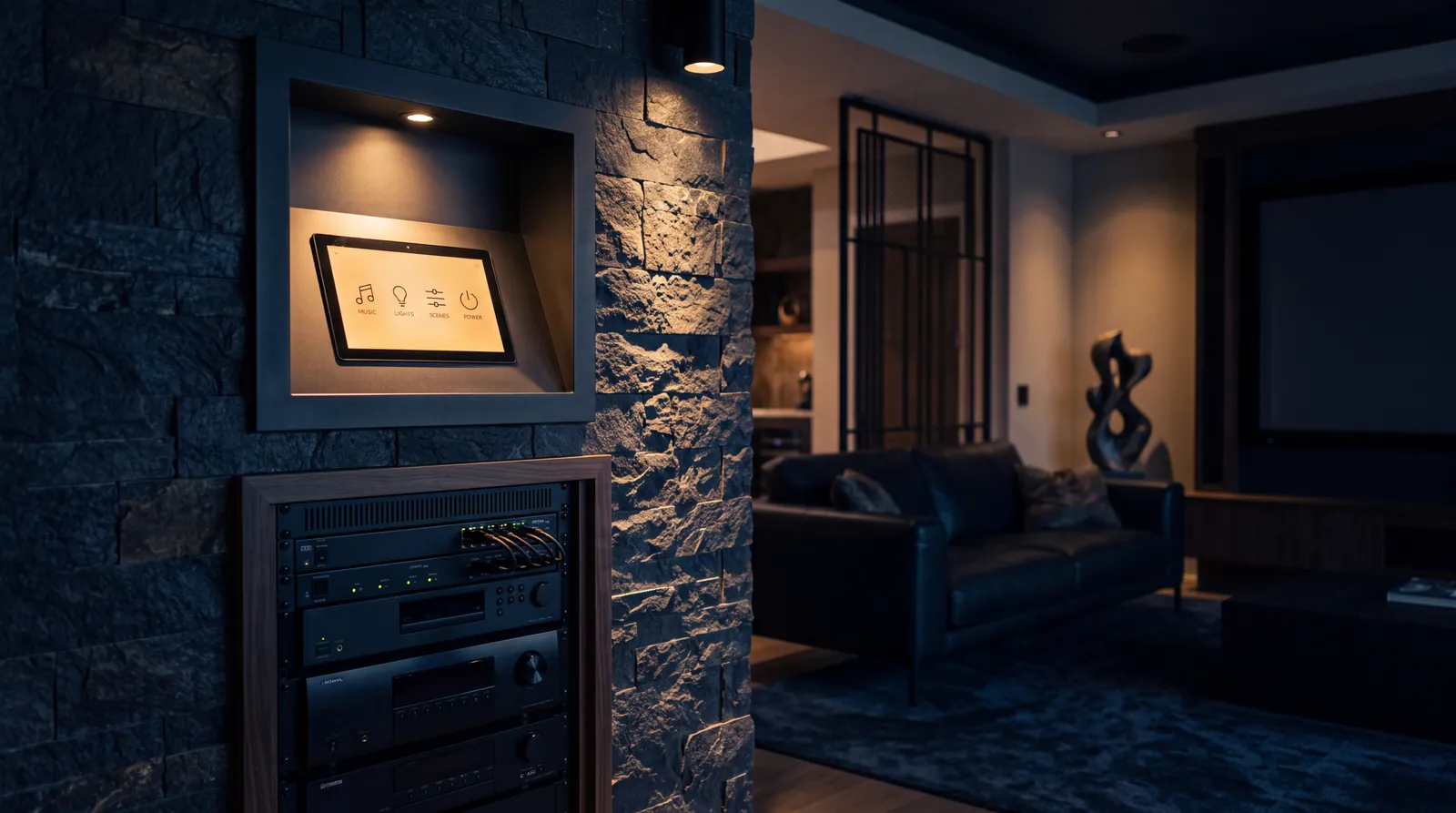
- The 10-second rack reveal · panning a clean, labeled equipment rack with a caption on why tidy wiring matters.
- One-tap scene demos · pressing a keypad and letting shades, lights, and audio move on cue.
- A quick before shot on arrival and the after shot at handoff, stitched together later.
- A homeowner's first reaction when the projector fires up.
- A 15-second answer to a question you get on every job, like what a theater actually costs to start.
Shoot vertical, keep it under 30 seconds, and always end with a clear next step people can act on.
What content ranks best in AI answers for smart-home firms
The content that ranks best in AI answers for smart-home firms is structured, question-led, and locally grounded · pages that answer a real homeowner question plainly in the first sentence, then back it with specifics an AI engine can lift and cite. Generative and answer engines reward clarity and named sources over keyword stuffing, so write the way people actually ask.
What tends to get quoted:
- Direct question-and-answer pages, like what a home theater costs in your metro or how long a whole-home install takes.
- Comparison and definition content that resolves a decision, not just describes a product.
- Locally specific detail · neighborhoods you serve, project types common to your area, real timelines.
- Consistent business facts across your site and profiles, so the model trusts the entity.
This is its own discipline, and it is worth reading up on answer engine optimization for integrators before you rewrite a single page. Getting quoted in an AI answer is the new top of the funnel, but it only pays if a captured lead reaches someone who responds.

Turning finished installs into website proof and testimonials
Turn a finished install into website proof by treating the handoff as a content shoot: capture photos and short video of the completed system, then ask for the testimonial while the client is happiest, on the day everything works. Most installers get customer testimonials by simply asking at that moment, in person or with a same-day follow-up message, before the memory fades and the calendar fills.
To make the portfolio a capture asset rather than a scrapbook:
- Photograph every completed room in good light and grab a 20-second walkthrough.
- Ask three quick questions at handoff · what problem you solved, what surprised them, who you would recommend it to.
- Build each project into a dedicated case-study page with the challenge, the solution, and a clear next step.
- Add a review request to your handoff checklist so it happens every time, not sometimes.
Structure those pages to be found, using website SEO from keywords to cost per lead, so proof does double duty as a ranking asset and a conversion tool.
Local citations and the local layer content can't skip
Local citations still matter for smart home companies because consistent business listings feed both maps ranking and the AI answers homeowners now trust. When your name, address, and phone number match everywhere they appear, search engines and answer engines treat you as one credible entity, and that trust flows into how often you surface for local queries.
Content cannot skip this layer. A brilliant theater walkthrough will not rank locally if your citations contradict each other across directories. Keep listings consistent, earn reviews steadily, and mention the areas you serve inside your content. For the full workflow, see local SEO that turns rankings into jobs. The local layer is quiet, but it decides whether the content ever gets seen by someone nearby who can actually buy.
Why content without fast follow-up quietly wastes the spend
Content without fast follow-up quietly wastes the spend because the leads it produces mostly arrive when your team is off the clock, and speed decides whether they convert at all. Across jobs booked online on Housecall Pro, 41% come in after hours, which is exactly when an AV shop's phone and DMs go unwatched. The content did its job · the pipeline leaked at the last inch.
The response data is brutal. Per the Harvard Business Review 2011 audit, The Short Life of Online Sales Leads, the average response time to a web-generated test lead among the 2,241 US companies that responded within 30 days was 42 hours. And per the InsideSales.com Lead Response Management study, the odds of contacting a lead called in 5 minutes versus 30 minutes drop 100 times. Speed is not a nicety · it is the difference between a booked consult and a stranger who moved on.
That is why the follow-up half has to be automatic. Study the lead response time benchmarks, get serious about capturing after-hours inquiries, and then go poke the demo account like a homeowner to feel the difference an instant reply makes. Content earns the click · the capture system earns the job.
Sources
- CEDIA
- Housecall Pro 2026 Field & Home Service Industry Trends
- Harvard Business Review, The Short Life of Online Sales Leads
- InsideSales.com Lead Response Management study (Dr. James Oldroyd, MIT Sloan)
Frequently asked questions
Client reaction walkthroughs convert best because a homeowner watching someone like them enjoy a finished system builds instant trust. Next come before and after room reveals, full project walkthroughs, short-form vertical reveals, and educational explainers. Rank your effort by how directly each format moves a viewer toward booking a consult, and always pair the video with a clear next step and a system that answers fast.
Structured, question-led, locally grounded content ranks best in AI answers. Write pages that answer a specific homeowner question plainly in the first sentence, then back it with real specifics like local pricing ranges and timelines. Keep your business facts consistent everywhere so answer engines trust you as one entity. Comparison and definition pages that resolve a decision tend to get quoted more than product descriptions.
The most reliable way is to ask at handoff, on the day the system is finished and working, when the client is happiest. Add a review request to your handoff checklist so it happens on every job. Ask a few quick questions about the problem you solved and who they would recommend you to, and capture a short video reaction if they are willing.
Build each project into a dedicated case-study page with the challenge, the solution, and a clear next step, using good photos and a short walkthrough video captured at handoff. Structure the page for search so it ranks and includes a way for a visitor to inquire immediately. Treat the portfolio as a capture asset, not a scrapbook, so proof also generates leads.
Yes. Consistent business listings feed both maps ranking and the AI answers homeowners increasingly rely on. When your name, address, and phone number match everywhere, search and answer engines treat you as one credible business, which improves how often you surface for local queries. Even excellent content will underperform locally if your citations contradict each other across directories.
Most go cold. A large share of homeowner inquiries arrive evenings and weekends when nobody is watching the phone or DMs, and response speed strongly predicts whether a lead ever converts. Research shows the average company takes many hours to reply, and odds of reaching a lead fall sharply after the first few minutes. An automatic instant response is what keeps after-hours leads from leaking.