Contents · 7 sections
Most residential AV work never touches protected health information, so a HIPAA-compliant answering service is rarely a genuine requirement for an integrator. The framework that actually matters is SOC 2-style data handling · how a vendor stores, shares, and secures the photos, voice notes, and contact details your leads send. Judge that by what you can inspect, not by a certification badge you take on faith.
HIPAA vs SOC 2 for an answering service: what actually applies to AV firms
HIPAA almost never applies to a residential AV answering service, because HIPAA governs protected health information handled by healthcare covered entities and their business associates, and installing a theater, lighting, or network system does not make you either of those. The reason integrators keep asking about it is that most answering-service and chatbot buying guides were written for medical offices and B2B SaaS, so they borrow 'HIPAA compliant' as a trust signal even when no health data is anywhere in the picture.
The honest distinction is this. HIPAA is a narrow US law about medical records. SOC 2 is a broad, voluntary auditing standard about how any service organization protects the customer data it holds. For a homeowner lead, the sensitive material is not medical · it is names, addresses, phone numbers, budget signals, and photos of the inside of someone's house. That is exactly the kind of data SOC 2's trust principles are built to cover.
CEDIA's 2023 market analysis pegs the US professional smart home and AV integration market near $29B across roughly 20,000 companies, and the average firm is small. Small firms rarely have a compliance officer, which is exactly why 'is it HIPAA compliant' becomes a shorthand for 'is my customer data safe here.' It is the right worry aimed at the wrong acronym. The useful question is whether the vendor can show you, in plain terms, where the data goes and who can see it.
When HIPAA genuinely comes into play for an integrator
HIPAA can reach an integrator only in narrow cases where the work actually involves protected health information, such as wiring a medical clinic, dental office, or hospital where patient data crosses systems you touch. In those projects a healthcare client may ask you to sign a business associate agreement, and any vendor that stores conversations from that engagement could inherit an obligation. That is a real scenario, but it is a commercial-healthcare scenario, not a residential one.
A few edge cases blur the line in the home. If you install in-home medical monitoring, fall detection, or telehealth setups tied to a provider's records, health data could pass through part of your stack. Even then, the trigger is the presence of PHI, not the fact that you answer phones. For the ordinary residential pipeline · theater builds, whole-home audio, shades, networking · no patient data exists, so no HIPAA duty attaches to the answering layer.
The practical takeaway · if you do healthcare-facility work, raise it explicitly with any vendor and get the data-handling terms in writing. If you do not, do not let a HIPAA checkbox stand in for the security questions that actually apply to homeowner leads.
What SOC 2 signals about how your leads' data is stored and shared
SOC 2 signals that an independent auditor has reviewed how a service handles customer data against a defined set of trust criteria, so it is the far more relevant framework for the homeowner information an answering service captures. It is published by the AICPA and organized around five trust service criteria · security, availability, processing integrity, confidentiality, and privacy. Security is the baseline every SOC 2 report includes; the others are added depending on what the service promises.
In plain terms, a SOC 2 review is asking questions like these:
- Security · who can access lead data, and how is it protected from people who should not see it.
- Availability · is the system reliably up, so conversations are not lost.
- Processing integrity · does the data captured match what the customer actually said.
- Confidentiality · is information limited to the people and systems that need it.
- Privacy · is personal data collected, used, and retained the way the vendor claims.
Here is the nuance an honest agency owes you. A formal SOC 2 attestation is a paid audit that many small vendors have not completed, and this knowledge base does not claim L5 holds one. What matters more than the certificate is whether a vendor practices SOC 2-style discipline and will explain it. A badge you cannot interrogate is weaker than a data flow you can trace end to end.
Where homeowner data actually lives in an AI answering system
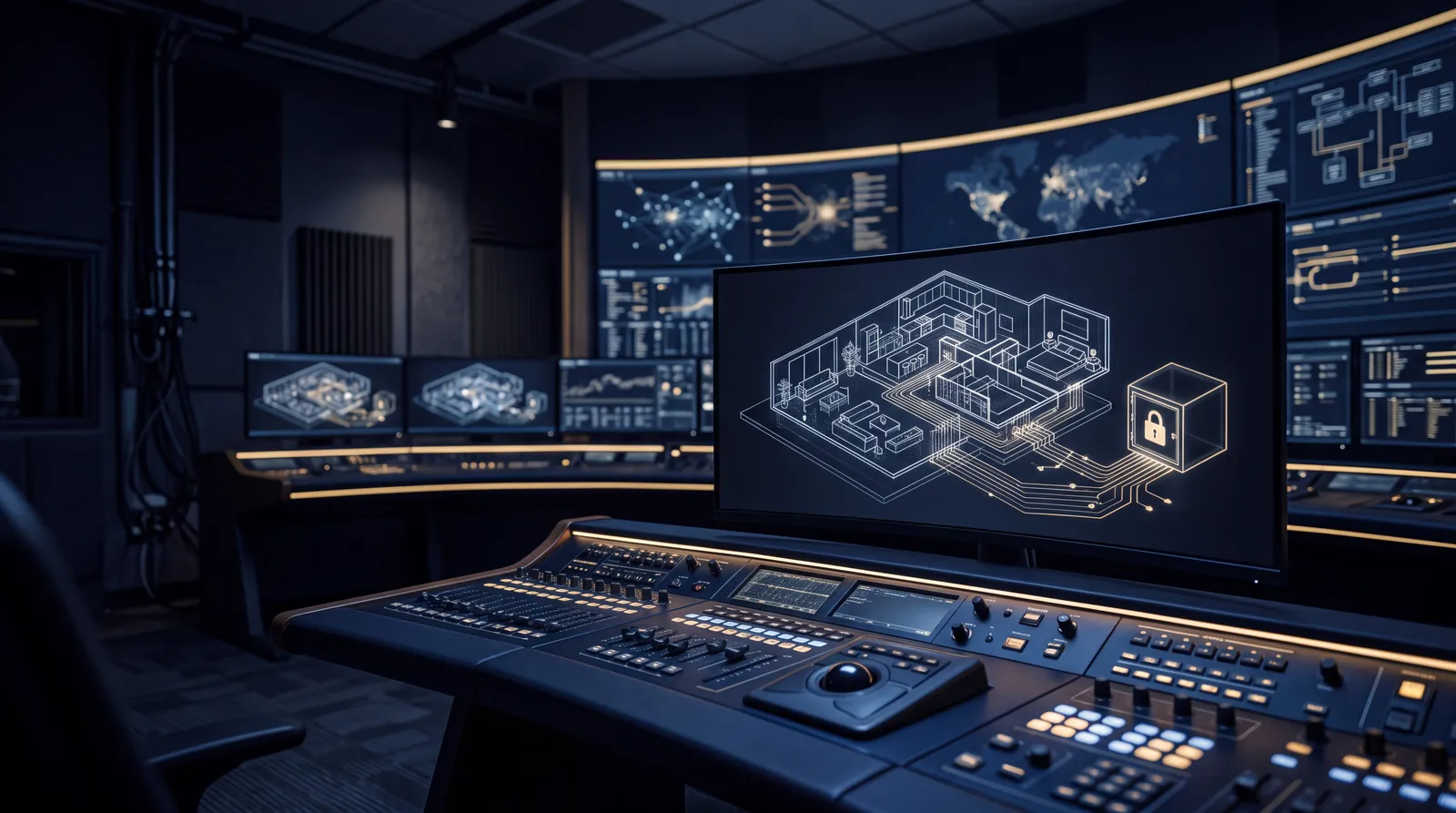
In L5's system, homeowner data lives in one shared knowledge base that both the DM agent and the voice agent read from, so a lead's information is captured once and used consistently rather than scattered across disconnected tools. When a prospect messages on Instagram or Facebook, or fills out the form that triggers a callback, the conversation, the qualifying answers, and any media they send flow into that same base and then into your calendar and CRM through the Omni portal setup done during onboarding.
That design matters for data handling because the media prospects send is unusually rich. The agent reads the photos of a room, listens to a voice note, and can handle a short video, then turns that into a qualified, booked consult. You can see exactly how the voice and DM agents run on one knowledge base rather than guessing at a black box. Fewer copies of the data in fewer places is, in security terms, a smaller attack surface.
The contrast with the industry norm is stark. In CE Pro's 2025 Software and Business Resources Deep Dive Survey, 78% of integrators still run parts of the business in spreadsheets, and only 47% use CRM or marketing automation software. Homeowner lead data sitting in loose spreadsheets and personal inboxes is usually far less controlled than data flowing through a single, access-governed system. The goal is not a badge · it is knowing where every photo and phone number ends up.
The compliance and security questions to ask any answering vendor
The strongest vetting move is to skip the acronym theater and ask any answering vendor concrete, answerable questions about where your leads' data goes and who controls it. Generic call centers and template chatbots often cannot answer these cleanly, which is itself a signal. Bring this list to any demo:
- Where is lead data stored, and does it stay in systems that are in my name and under my control.
- Who on your team can access my conversations, photos, and voice notes, and how is that access limited.
- How does the data move from a DM or call into my calendar and CRM, and can I see that flow.
- What happens to captured data if I cancel · do I keep it, and is it deleted on your side.
- Do you practice SOC 2-style controls, and will you put your data-handling terms in writing.
- If I do healthcare-facility work, will you sign a business associate agreement for those engagements.
Ask these against the actual after-hours moment too, since that is when most inquiries land and when data handling is hardest to supervise. If you want the broader case for that coverage window, this after-hours answering service lead-capture breakdown pairs well with this checklist, and the wider view on adopting AI tools for AV operations covers how these systems fit the rest of your stack. Compliance specifics depend on your exact tools, so the cleanest way to pressure-test them is to walk through your specific data setup on a Clarity Call, which ends with a straight recommendation including a no if it is not worth it for you.
Why 'is this a bot' honesty is part of trust, not just compliance
Trust is not only about encryption and audits · it is also about whether the system is honest with the person on the other end, and this one is built so that when a homeowner directly asks if they are talking to a bot, the agent tells the truth. That single rule does more for buyer confidence than most certifications, because it removes the sense of being tricked at the exact moment a prospect is deciding whether to share their address, budget, and photos of their home.
The same principle runs through the demo. L5 Orbit AV is a fictional Denver AV company running the exact system clients get, and its bio openly states it is a demo by L5 Relay. Nothing is hidden · the point is to show the product working in the open. You can poke the live demo account yourself, message it like a homeowner, send it a photo or a voice note, and try to stump it before any money changes hands.
That is the throughline of this whole topic. Data handling and transparency are things you can inspect, not promises you take on faith. A vendor that lets you test the agent, explains where your leads' data lives, and tells your customers the truth is showing you the security posture that a HIPAA checkbox alone never could.
Sources
- CEDIA
- CEDIA
- CE Pro 2025 Software & Business Resources Deep Dive Survey
- CE Pro 2025 Software & Business Resources Deep Dive Survey
Frequently asked questions
In almost all cases, no. HIPAA governs protected health information handled by healthcare covered entities and their business associates. Residential AV work such as theater builds, audio, shades, and networking does not involve patient records, so no HIPAA duty attaches to the answering layer. The exception is commercial healthcare projects where you touch patient data, in which case a client may ask you to sign a business associate agreement.
SOC 2 is a voluntary auditing standard from the AICPA that reviews how a service organization protects customer data against five trust criteria: security, availability, processing integrity, confidentiality, and privacy. It matters far more than HIPAA for an AV answering service because the sensitive data captured is homeowner names, addresses, budget signals, and photos of their homes, which is exactly what SOC 2 principles are designed to protect.
Only in narrow cases. HIPAA can reach an integrator when the work involves protected health information, such as wiring a clinic or hospital, or installing in-home medical monitoring tied to a provider's records. In those situations a healthcare client may require a business associate agreement. For ordinary residential projects, no patient data exists and HIPAA does not apply.
In L5's system the DM agent and voice agent both read from one shared knowledge base, so a lead is captured once and used consistently. Conversations, qualifying answers, and any photos or voice notes a prospect sends flow into that base and then into your calendar and CRM through the Omni portal setup done during onboarding. Keeping data in one access-governed place means a smaller attack surface than spreadsheets and scattered inboxes.
Ask where lead data is stored and whether it stays in your control, who on the vendor's team can access your conversations and media, how data moves into your calendar and CRM, what happens to your data if you cancel, whether they practice SOC 2-style controls and will put terms in writing, and whether they will sign a business associate agreement for any healthcare-facility work.
They are when the system is transparent and its data flow is inspectable. L5's agents are built so conversations feel human, and when a customer directly asks if they are talking to a bot, the agent tells the truth. The open demo account, L5 Orbit AV, states in its bio that it is a demo and lets you test the product in the open before you pay, which is the kind of transparency that builds trust.